


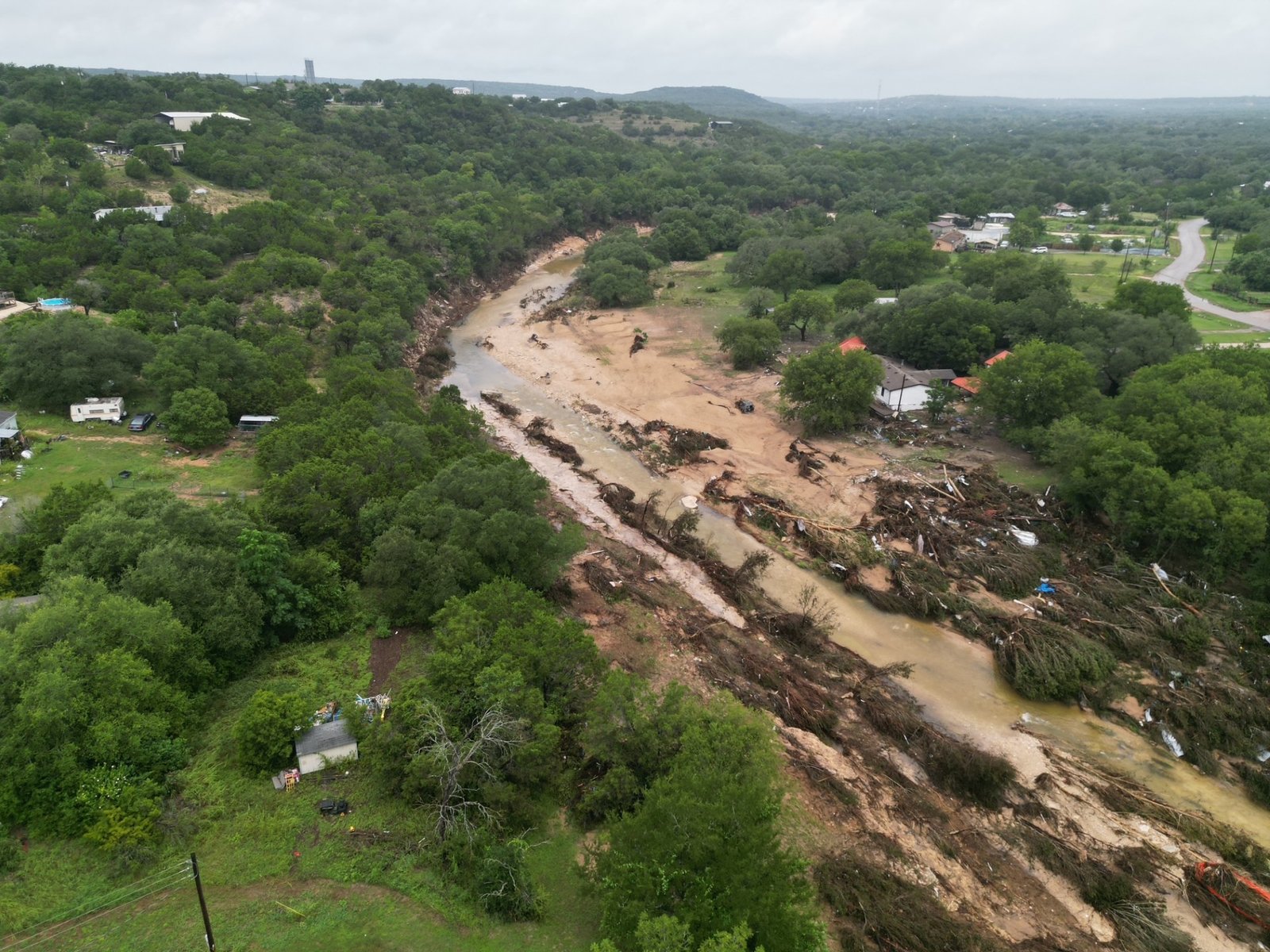
When most people think of floods, they picture rising waters and property damage—but what’s often overlooked is the lethal force of the moving water itself. Floodwaters are not just wet—they’re fast, heavy, and capable of destroying nearly everything in their path. Understanding the power of floodwater can save lives.
How Fast Water Turns Deadly
- 6 inches of moving water can knock over an adult.
- 12 inches (1 foot) of water can sweep away a small car.
- 24 inches (2 feet) of rushing water can carry off most vehicles, including SUVs and trucks.
What Does That Force Compare To?
Water Speed Force on Objects Comparable Wind Force
- 3 mph (walking pace) Can knock you off balance Equivalent to 20–30 mph winds
- 6 mph Exerts ~134 lbs of force per square foot Like 50–60 mph winds (strong tropical storm)
- 10 mph Exerts ~300+ lbs per square foot Comparable to EF1 tornado (86–110 mph wind pressure)
- 25+ mph Exerts thousands of pounds of force Equivalent to an EF3+ tornado (136+ mph winds)
Fact: Water weighs over 62 pounds per cubic foot. So when it moves, the kinetic energy is massive, and the pressure it puts on structures, people, and vehicles is devastating.
Why Cars and Roads Don’t Stand a Chance
Floodwaters are deceptively powerful because: – They carry debris—like logs, glass, metal, and other dangerous objects. – They can undermine the roadbed beneath what looks like a shallow puddle. – Cars float more easily than you think. Once water reaches the floorboards, buoyancy reduces tire traction, and your car can be swept away like a toy. According to FEMA, more than half of all flood-related deaths occur when people attempt to drive through floodwaters.
Not Just Physical Danger — But Biological and Chemical, Too
Floodwaters often carry:
- Sewage and bacteria (E. coli, hepatitis) –
- Chemical runoff from homes, farms, and industrial sites
- Snakes, fire ants, and other displaced wildlife
Walking through floodwater can lead to serious infections, chemical burns, or injury from hidden debris.
The Bottom Line: Turn Around, Don’t Drown®
The National Weather Service says it best: “Turn Around, Don’t Drown.” No matter how shallow or slow-moving the water looks, it may be deadly underneath. Always assume moving floodwater is stronger than it appears—because it is.
Final Thoughts
Floods are the #1 weather-related cause of death in the U.S., and much of that comes not from drowning in homes—but from underestimating the force of water outdoors. Whether walking or driving, the smartest and safest decision you can make is to avoid any contact with moving floodwater. Stay safe. Stay back. Water always wins.


